https://www.youtube.com/watch?v=iX6w1P60m8M
Summary
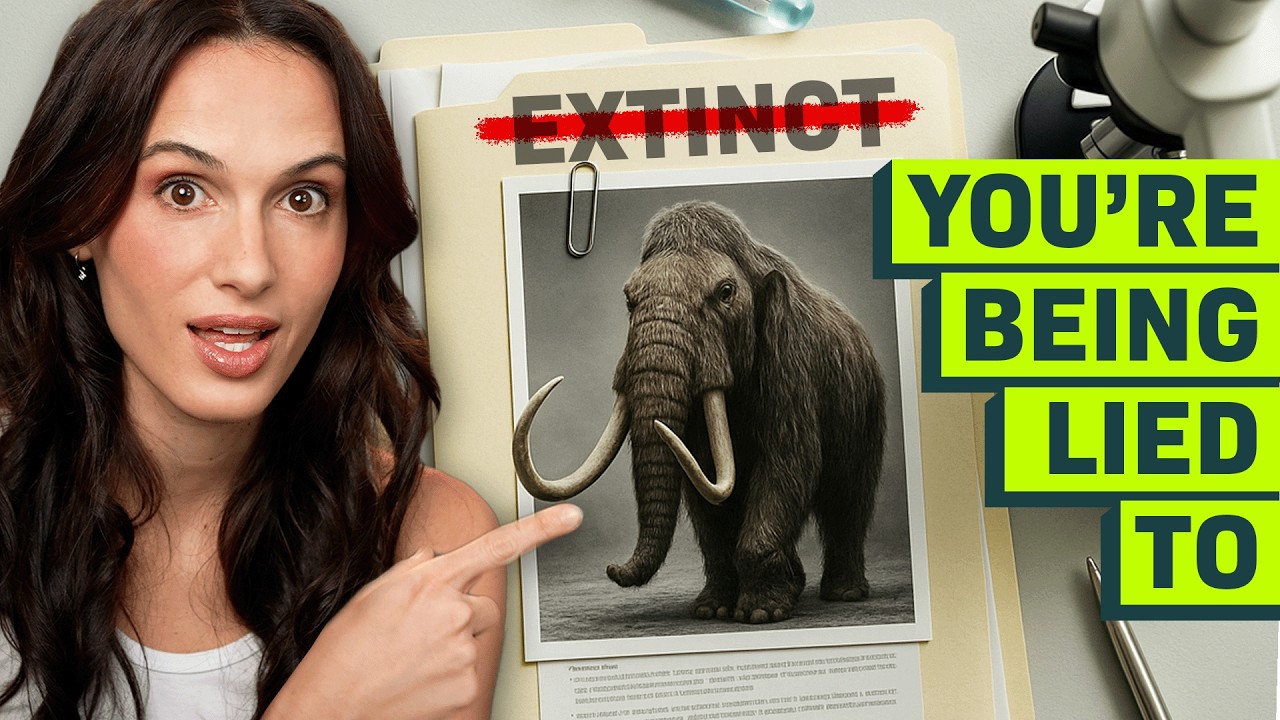
This video explores the emerging field of de-extinction (bringing back extinct animals like the Tasmanian tiger, woolly mammoth, or dodo bird), arguing that the most profound application of this technology lies not in reviving the past, but in genetic rescue—saving species alive today.
The video outlines three methods for de-extinction:
Back Breeding: Selectively breeding closely related living animals until traits of the extinct species reappear (e.g., the quagga). This process is slow.
Cloning (Somatic Cell Nuclear Transfer): Requires a whole, living cell from the extinct animal, which is extremely rare (e.g., the short-lived bucardo clone).
Gene Editing (CRISPR): The most popular method, involving sequencing fragmented DNA from the extinct animal and editing key genes into a close living relative. This creates a genetically modified version, not an exact replica (e.g., the direwolf project).
The host emphasizes that the true, optimistic potential lies in using gene editing for conservation science (genetic rescue):
Increasing Diversity: Introducing genetic material from museum specimens into genetically bottlenecked populations (e.g., the black-footed ferret) to improve resilience against disease.
Disease/Poison Resistance: Modifying a single gene to make endangered species resistant to invasive predators (e.g., making the northern quoll resistant to the toxic cane toad).
Ultimately, the debate is framed as an ethical responsibility: should humanity use this powerful science to repair the ecosystems we have already damaged (e.g., restoring the Tasmanian tiger as an apex predator to rebalance its ecosystem)? The consensus is that while a wild revived animal is decades away, the conservation benefits are immediate and critical.
Discussions
1. Ethical Responsibility and 'Genetic Rescue' The video argues that the real power of de-extinction technology lies in "genetic rescue" using gene editing to save currently endangered species. To what extent do you believe humanity has a moral responsibility to use advanced genetic technology, such as CRISPR, to actively manage and repair the genetic health of wild species we have pushed to the brink of extinction?
2. Defining De-Extinction: Replica vs. Proxy Scientists are creating genetically modified proxies (like a woolly mammoth edited from an Asian elephant) rather than perfect replicas. Does calling this work "de-extinction" mislead the public about the actual goal and risk diverting resources from more traditional conservation efforts? Should scientists change the branding to "Genetic Restoration" or "Assisted Evolution"?
3. The 'Jurassic Park' Dilemma: Ecosystem Consequences In the case of the Tasmanian tiger, scientists propose reintroducing an apex predator to restore a damaged ecosystem. What are the major ecological risks of placing a genetically edited species into a modern environment it hasn't inhabited for decades, and what necessary ethical and safety protocols should be mandated before any de-extinct animal is released, even into a contained environment?
4. Funding and Resource Allocation Given that global conservation efforts are severely underfunded, do you believe the substantial capital being invested in high-profile de-extinction projects (like the Mammoth or Tasmanian Tiger) is a necessary tool to drive innovation, or is it a harmful distraction of resources that should be spent on protecting existing, viable species and habitats?
5. Nature vs. Nurture: Behavioral Instincts The video touches upon the debate of whether a revived animal would retain its complex behavioral instincts, such as hunting. How much of an animal's complex behavior (e.g., survival skills, predatory instincts) do you believe is hardwired genetically versus learned socially, and how does this uncertainty complicate the viability of any de-extinction project?
'영어 모임 주제' 카테고리의 다른 글
| Sanbon English Lab 11월 주제 Zucman Tax 프랑스 부유세 (0) | 2025.11.02 |
|---|---|
| Sanbon English Lab 10월 주제 기축통화 달러의 시대는 끝이 났을까? (0) | 2025.10.20 |
| Sanbon English Lab 10월 주제 Nepal Gen Z revolt 네팔 젠지 혁명 (1) | 2025.09.24 |
| Sanbon English Lab 9월 주제 Gaza War 이스라엘-팔레스타인 1편 (0) | 2025.09.15 |
| Sanbon English Lab 8월 주제 미국 러시아 우크라이나 3자 회담? 우크라이나-러시아 전쟁 근황 (0) | 2025.08.20 |