https://www.youtube.com/watch?v=yb-qGAaFVAc
This video discusses why more countries, including the UK, France, Canada, and Australia, are starting to recognize Palestine as a state and what that recognition means.
Here are some of the main points:
- A Step Toward the Two-State Solution: The recognition of Palestine as a state is a step toward implementing the two-state solution, in which the states of Palestine and Israel would exist side by side.
- A New Political Climate: This new wave of recognition is significant because it is coming from wealthy countries that have historically been supportive of Israel. This is largely a response to growing public anger over Israel's actions in Gaza.
- Symbolic, Not Always Effective: While the recognition is an important symbolic step, many are skeptical that it will lead to any meaningful change for Palestinians.
- Conditions and Unclear Borders: Some countries have placed conditions on their recognition, which has drawn criticism. Another issue is that the countries recognizing Palestine have not specified what the borders of the state of Palestine would be.
- A Faltering Solution: The video also mentions that many people think the two-state solution is no longer a viable option due to the expansion of Israeli settlements.
1. The video suggests this new wave of recognition is a response to growing public anger over Israel's actions in Gaza. Do you agree? What other factors might be motivating these countries to take this step now, after so many years?"
2. The video mentions that many people believe the two-state solution is no longer viable. Do you think recognizing Palestine still serves a purpose in achieving peace, or is it a sign that a new solution needs to be considered? What would a new solution look like?"
3. Finally, let's consider the phrase 'Symbolism vs. Reality.' Based on the video, what is the most significant symbolic benefit of recognizing Palestine, and what is the biggest practical challenge that remains? In your opinion, which is more important at this stage: the symbolic message or the practical outcome?
https://www.aljazeera.com/news/2025/9/10/maps-israel-has-attacked-six-countries-in-the-past-72-hours
Maps: Israel has attacked six countries in the past 72 hours
In just three days, Israel has carried out strikes in Palestine, Lebanon, Syria, Tunisia, Qatar and Yemen.
www.aljazeera.com
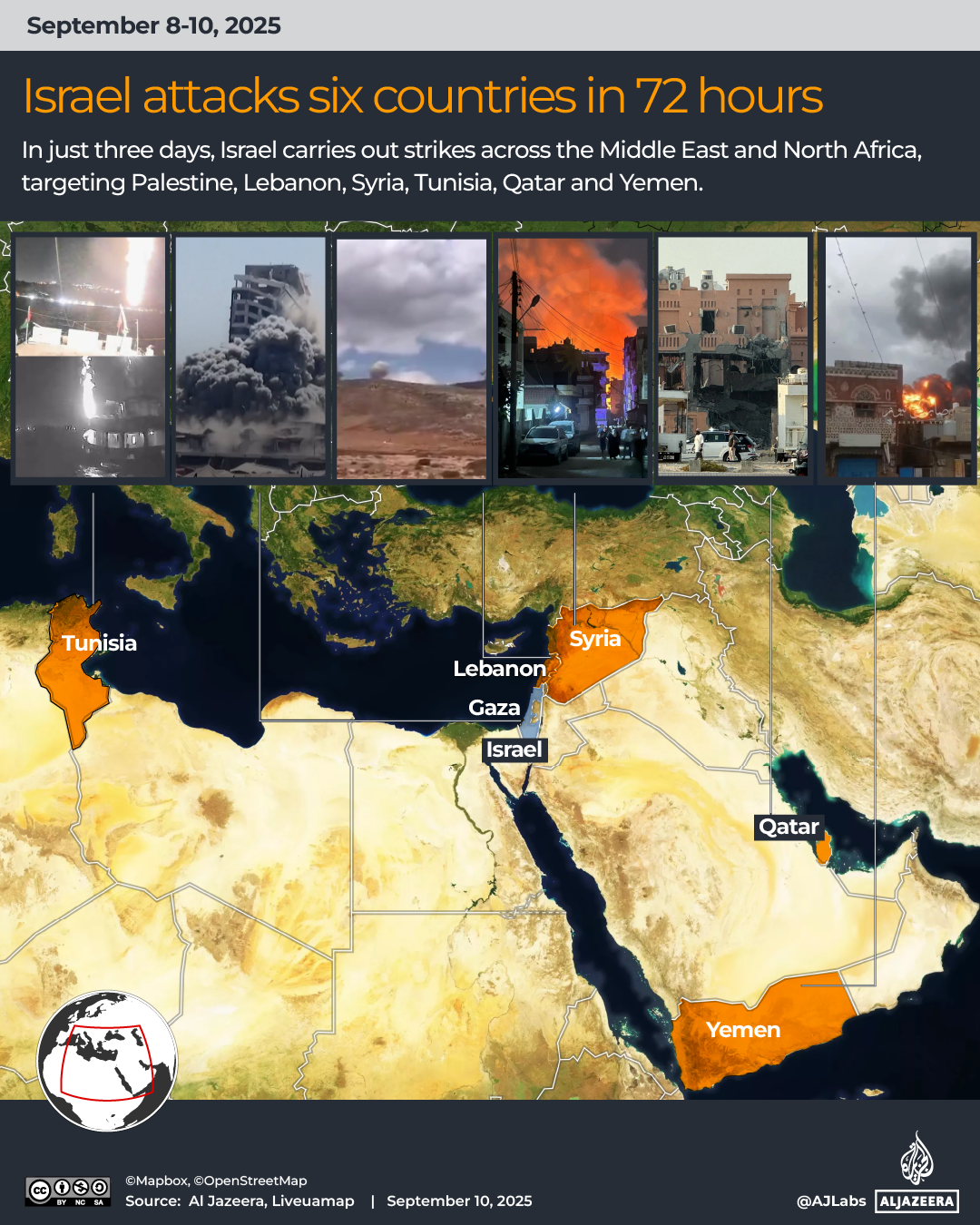
4. On a global and political scale, what do you think is the main strategic goal of Israel's actions in attacking six different countries? How might these strikes impact regional stability and the diplomatic efforts of other nations?
5. Drawing a parallel to Israel's military doctrine of pre-emptive strikes and a willingness to act unilaterally against perceived threats, how would South Korea's security and the geopolitical situation in Northeast Asia change if it adopted a similar approach to counter North Korea's nuclear threats?