https://www.youtube.com/watch?v=txtDpCLHUkU
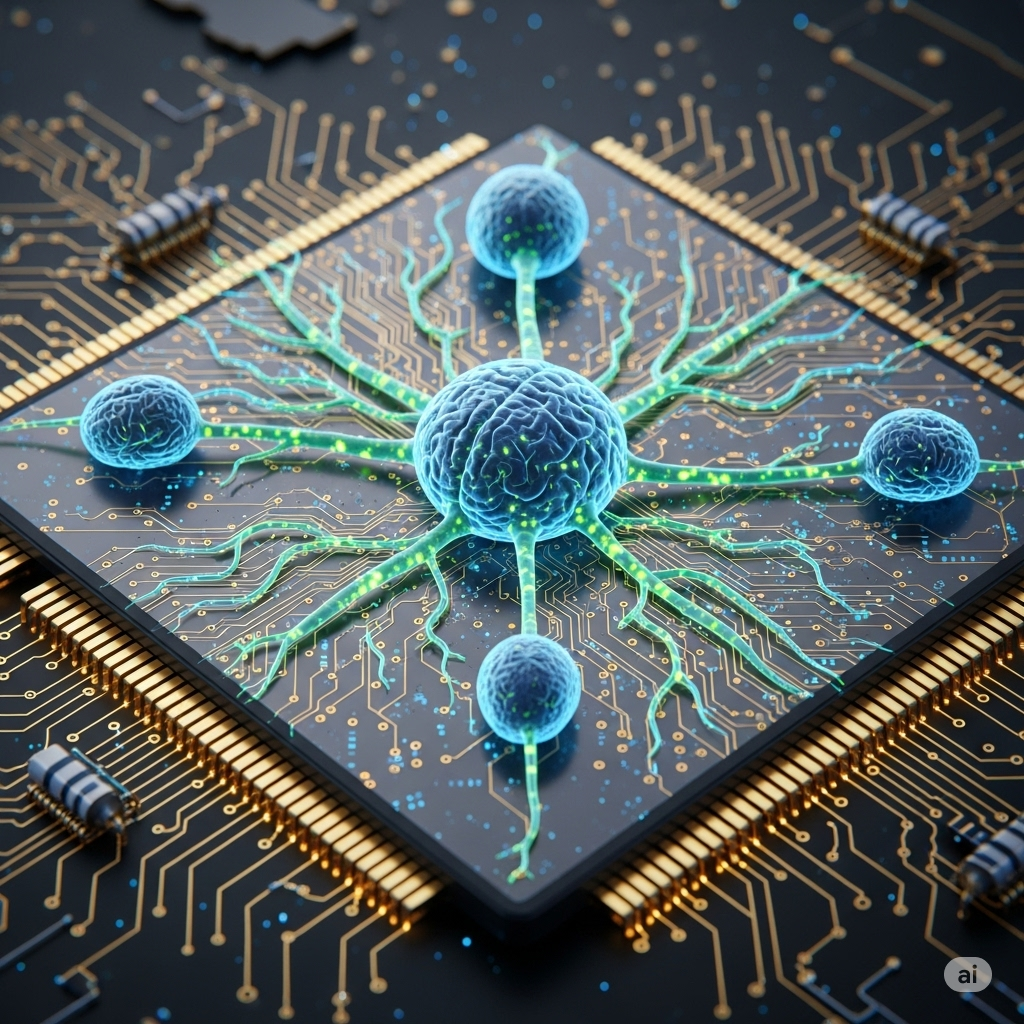
This video explores the emerging field of biocomputing, where living human brain cells are integrated with silicon chips to create a new form of artificial intelligence.
Here are the key takeaways:
- The "Dishbrain" Experiment: Researchers successfully taught a cluster of living brain cells to play the video game Pong, demonstrating the ability of biological systems to learn and interact with a digital environment.
- Why Biocomputing?: Biocomputing holds significant advantages over traditional silicon-based AI. Brains are far more energy-efficient, require less training data, and are not limited by the physical constraints of silicon chips.
- Potential Applications: Beyond just AI, this technology has vast potential in biomedicine. Brain organoids (mini-brains) can be used to model neurodegenerative diseases like Alzheimer's and to test new drugs, potentially reducing the need for animal testing.
- Challenges and Concerns: The field faces major hurdles, including the difficulty of maintaining living cells (they need to be fed, kept at a specific temperature, and eventually die) and the engineering problems of integrating biological and digital systems.
- Ethical Debate: The video also touches on significant ethical questions, primarily the concern of whether these brain organoids could one day become conscious or feel pain.
1. What are your thoughts on "biocomputing"?
2. The video highlights the incredible efficiency of a biological brain and its potential for medical breakthroughs. One of the most significant applications could be reducing or even replacing animal testing. In your opinion, is this medical application a more compelling reason to pursue biocomputing than creating smarter AI? Why or why not?
3. The video mentioned several major challenges, both technical and ethical, such as scalability and the possibility of consciousness. Which of these challenges do you believe is the most difficult to overcome? What kind of rules or regulations do you think should be put in place to govern this technology?
4. Looking to the future, how long do you think it will be before biocomputing moves from the lab to commercial use? What do you think the world will look like when that happens? Will it be a positive development for humanity, or a cause for concern?
5. Our gaming computer spends 400wh of energy to run 100% load, which equivalent to 30 minutes of running. Beside, our brain only requires 20w to run for a day. What do you think of this?
equivalent to the energy a person burns during a 30-minute
'영어 모임 주제' 카테고리의 다른 글
| Sanbon English Lab 10월 주제 Nepal Gen Z revolt 네팔 젠지 혁명 (1) | 2025.09.24 |
|---|---|
| Sanbon English Lab 9월 주제 Gaza War 이스라엘-팔레스타인 1편 (0) | 2025.09.15 |
| Sanbon English Lab 8월 주제 미국 러시아 우크라이나 3자 회담? 우크라이나-러시아 전쟁 근황 (0) | 2025.08.20 |
| Sanbon English Lab 8월 주제 (예정) 에겐남 테토남의 본질 사랑에 빠진 뇌를 연구하는 헬렌 피셔 도파민 세로토닌 테스토스테론 에스트로겐 (1) | 2025.08.03 |
| Sanbon English Lab 8월 첫번째 모임 주제 "데이터 센터의 딜레마: 디지털 발전인가, 환경 부담인가? (0) | 2025.08.03 |